

Issue #714
Essential Reading For Engineering Leaders

Friday 8th May’s issue is presented by PlanetScale

“Literally The Only Team We Trusted Enough To Leave Aurora”
That’s a real quote from a real customer, and he’s not alone. Cursor, Cash App, Intercom, and thousands of other companies all trust PlanetScale for their most demanding workloads.
PlanetScale is an opinionated database platform for Postgres and MySQL designed to eliminate the pain of managing databases.
Branching, query insights, online schema changes, unlimited IOPS
Fastest benchmarked Postgres and MySQL
Horizontal sharding w/ Vitess and Neki
Designing The AI-Native Engineering Organization
— Justin Reock
tl;dr: “A discussion with Tim Bozarth (CVP, CoreAI at Microsoft), Nancy Wang (CTO, 1Password), and Taroon Mandhana (CTO of AI & Teamwork at Atlassian) to learn how they’re adapting to the impact AI is having now and in the future. The panel covered topics such as org design, managing costs, and how the developer role is changing.”
Leadership Management AI
How To One-On-One
— Ben Balter
tl;dr: Most 1:1s fail in one of three ways: (1) Spending your team’s only protected synchronous time on information that belongs in writing. (2) Sugarcoating hard feedback until nobody walks away clear on what actually needs to change. (3) The 1:1 that keeps getting canceled because “something came up,” until the relationship slowly starves. Ben shows us how to structure a 1:1.
Management Guide
“Literally The Only Team We Trusted Enough To Leave Aurora”
tl;dr: “That’s a real quote from a real customer, and he’s not alone. Cursor, Cash App, Intercom, and thousands of other companies all trust PlanetScale for their most demanding workloads. PlanetScale is an opinionated database platform for Postgres and MySQL designed to eliminate the pain of managing databases.”
Promoted by PlanetScale
Database
How Can Engineering Leaders Calculate The Return On Their AI Investments?
— Lizzie Matusov
tl;dr: “AI usage has crossed the line from experiment to default. As that usage scales, the conversation among engineering leaders has shifted from “should we adopt” to “what is all of this actually worth,” and ROI has become a regular topic in staff meetings, board prep, and budget reviews. This week we ask: what does it take to realize ROI from AI-assisted software development?”
Leadership BestPractices AI
“One of the tests of leadership is the ability to recognize a problem before it becomes an emergency.” — Arnold Glasow
Becoming A Business Leader, Not Just A Technical One
— Kevin Goldsmith
tl;dr: “Most directors, VPs, and CTOs are technically excellent and organizationally capable by the time they earn their titles. A lot of them hit a ceiling not because of either of those things, but because the conversation moves from “is this the right architecture” to “is this the right business,” and they keep answering the first question.”
Leadership Business CareerGrowth
Why AI Benchmarks Are Misleading
tl;dr: “AI coding benchmarks report 80–90% success rates. But those numbers don’t hold up in real systems. Even top models succeed on fewer than 1 in 4 refactoring tasks without errors. New research across 57 LLMs reveals why most software development teams are measuring the wrong things, and what it means for your AI rollout.”
Promoted by BlueOptima
AI Metrics
Platform Engineering End-To-End
— Luca Cavallin
tl;dr: A comprehensive walkthrough of platform engineering as a discipline - from why it exists to what success looks like. Covers team structure, product thinking, migrations, stakeholder management, and operations.
Infrastructure DeepDive
Construct With Collaborators, Call With Work
— Shahar Roth
tl;dr: “A design guideline from Google: inject long-lived dependencies through the constructor and pass per-call data as method parameters. The separation promotes reusability, testability, cleaner APIs, and predictable behavior — though what counts as a ‘collaborator’ versus ‘work’ depends on the object’s identity and lifetime.”
BestPractices
10 Lessons For Agentic Coding
— Drew Breunig
tl;dr: “I’ve been keeping a running list of tips for agentic coding: guidelines or rules one might give to someone just getting started with Codex, Claude Code, Pi, or any other agent. Ideally each tip is generalizable guidance, relevant to any agentic programming. I’m also looking for durable lessons that will stick around as models and harnesses improve.”
Agents BestPractices DeveloperProductivity
Null Pointer
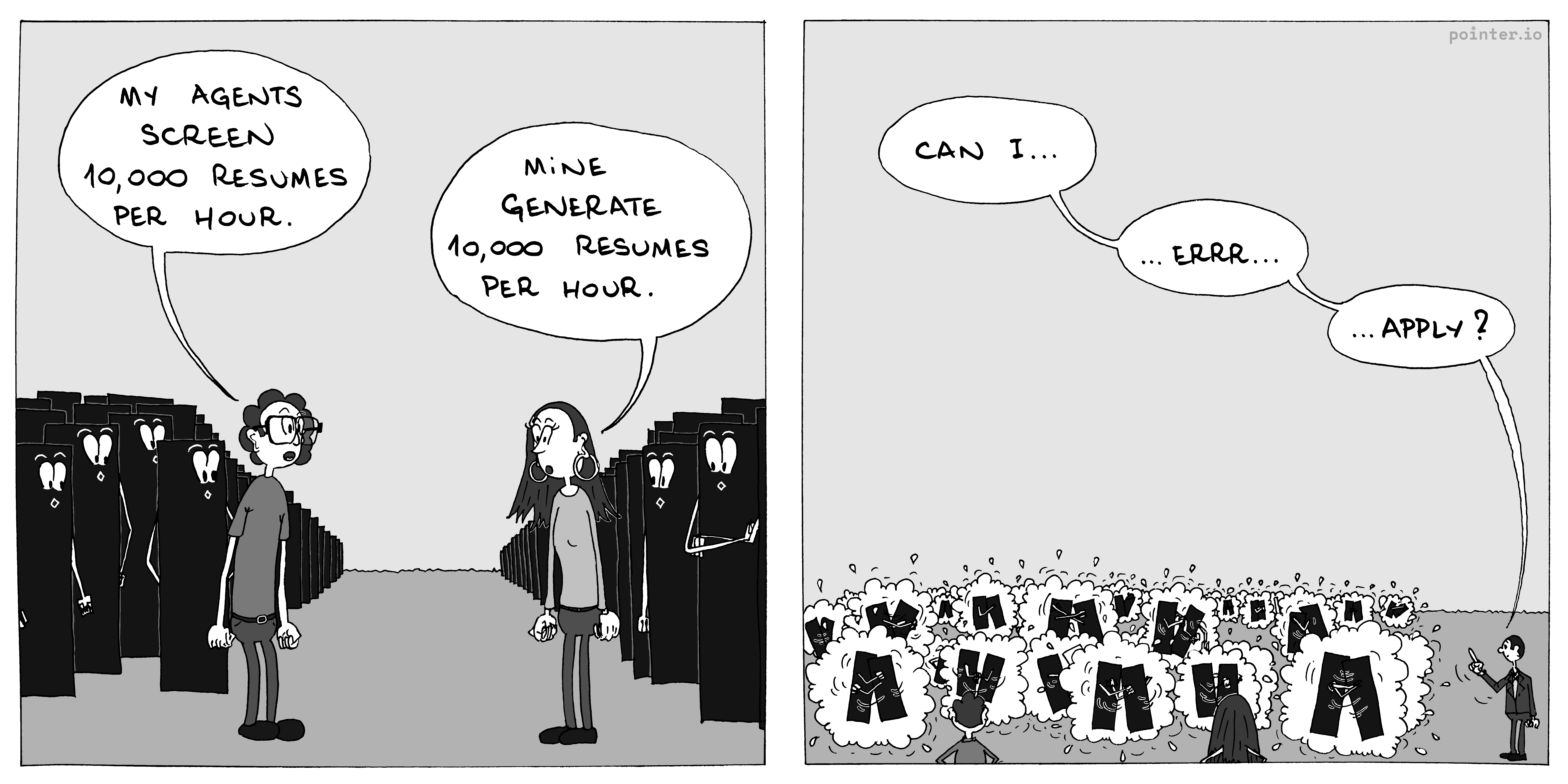
Hand-drawn by Manu. View the archives here